Launch offer — valid today only

Boiler Operator License Exam: One Topic per Page, Drawn Like the Plant You Work In With Every Valve, Gauge and Control Drawn Step by Step!

psig vs psia, firetube boilers, safety valves, the feedwater line, steam traps, combustion, pumps, water treatment and blowdown: in your course book it's a wall of text. Here each topic fits on one page, with the drawing and what you need to remember. 80 illustrated pages.

I WANT TO STUDY IT WITH DRAWINGS

🔒 Secure checkout · PDF by email · 30-day guarantee

One topic per pagethe drawing shows you the system and the text walks you through it
80 illustrated pages12 parts, from who licenses you to exam day
Up-to-date sourcesNIULPE public syllabi, ASME Code principles and OSHA 29 CFR 1910

This Is What the Pages You Will Study Look Like

One topic per page: a drawing that shows you how it works, and boxes with what you need to know:

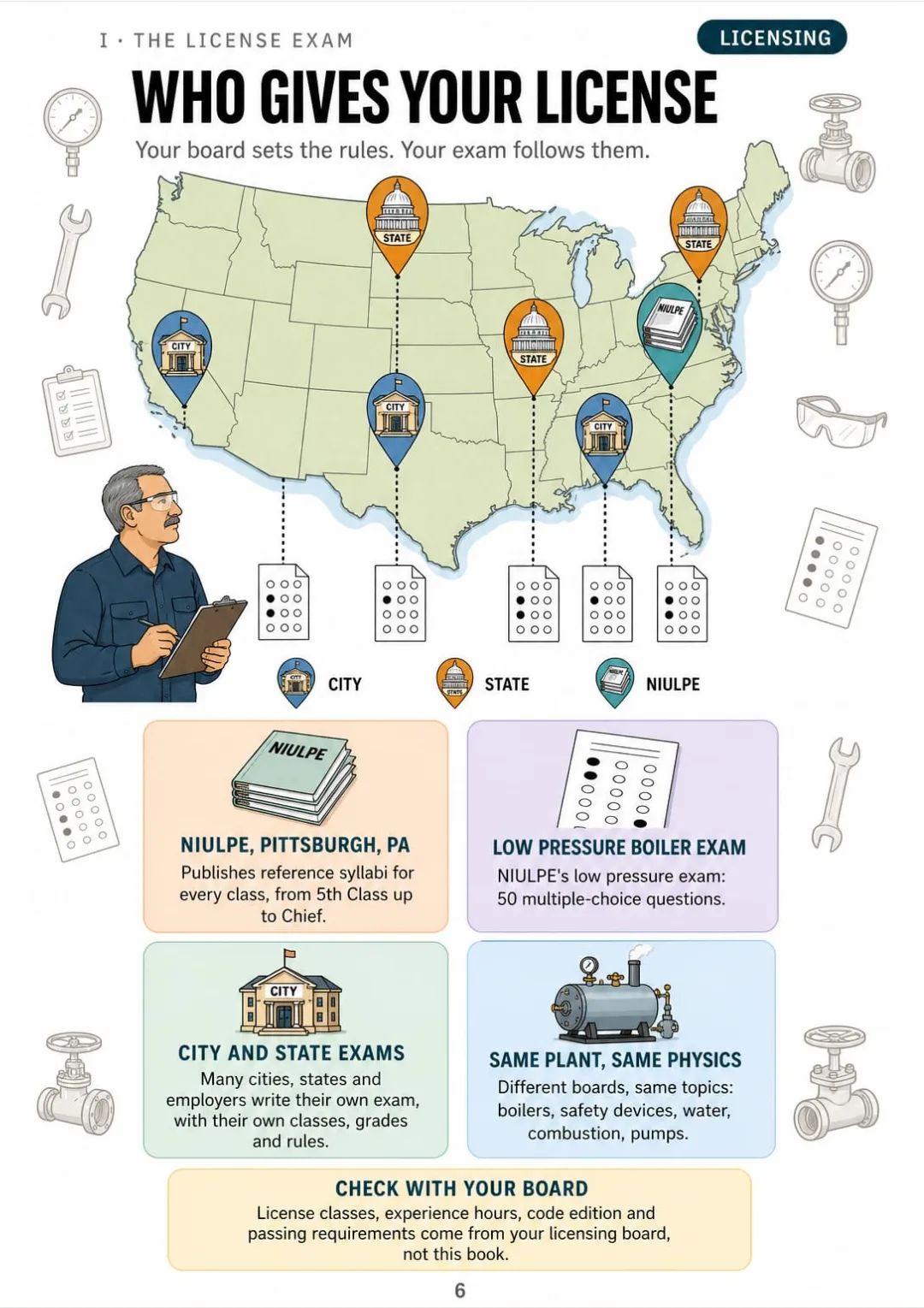
NIULPE syllabi from 5th Class to Chief, and the 50-question Low Pressure exam
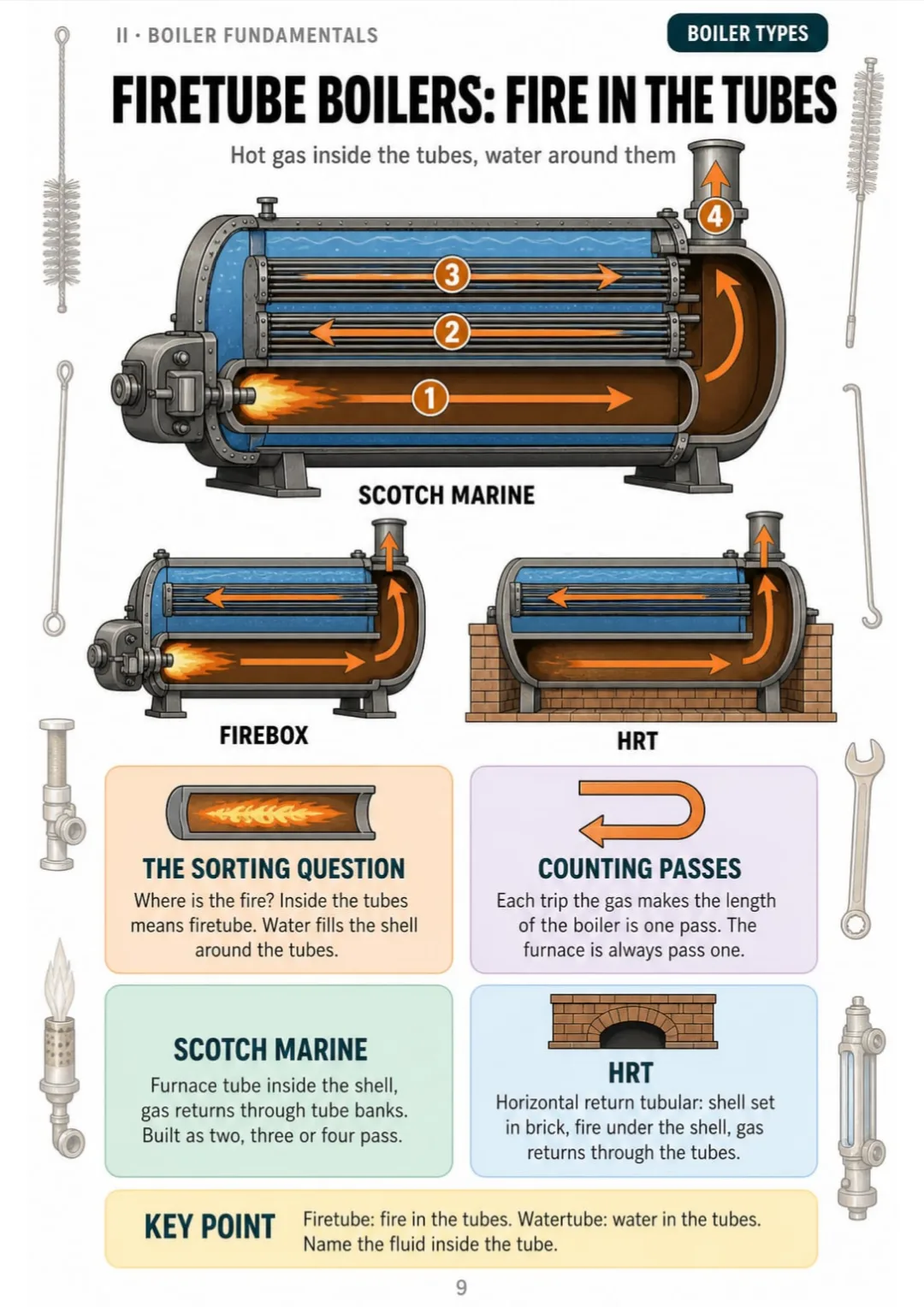
Scotch marine, firebox and HRT: numbered gas passes from furnace to stack
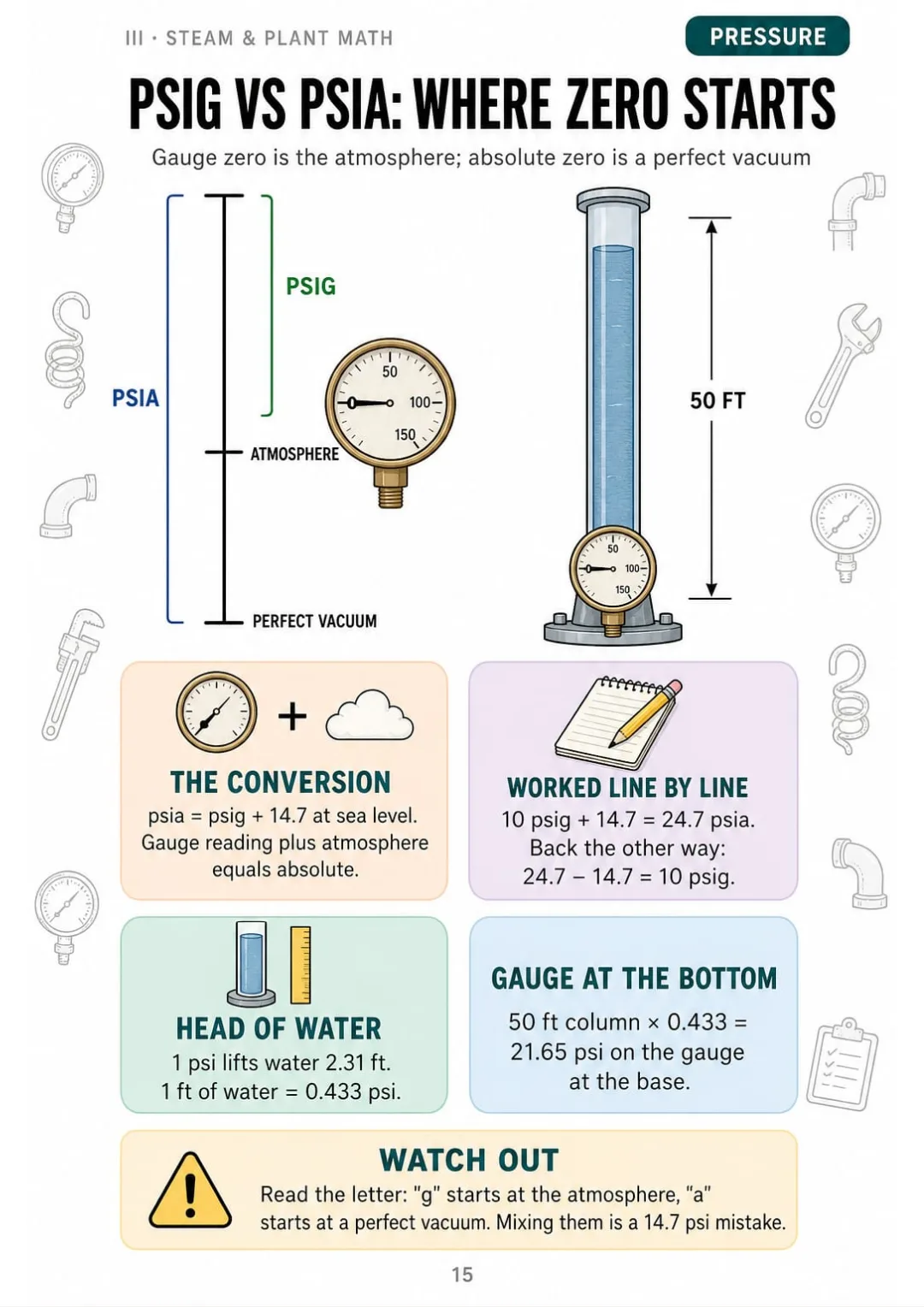
10 psig + 14.7 = 24.7 psia, and 50 ft of water = 21.65 psi
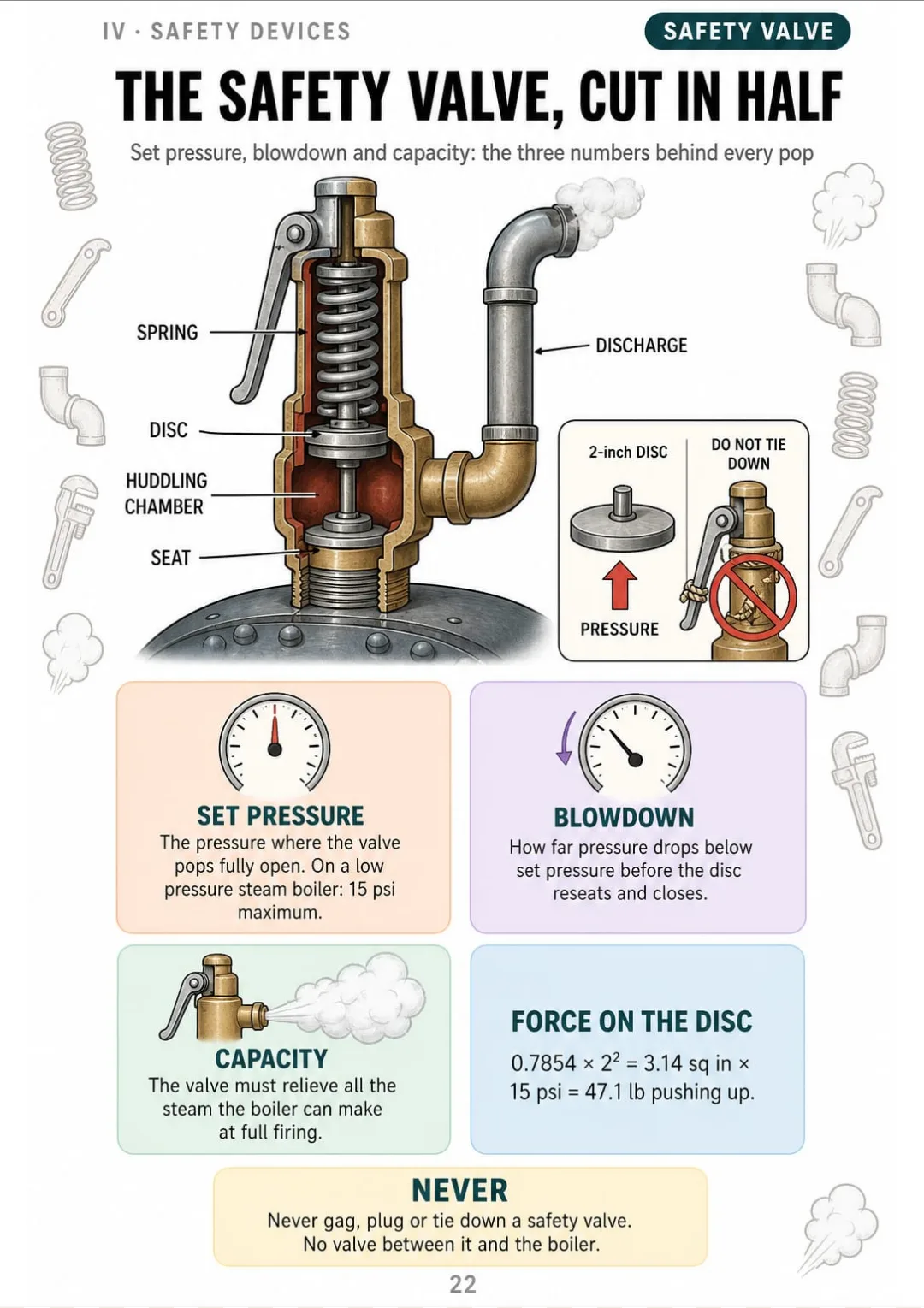
Pop safety valve cut in half: 3.14 sq in × 15 psi = 47.1 lb on the disc
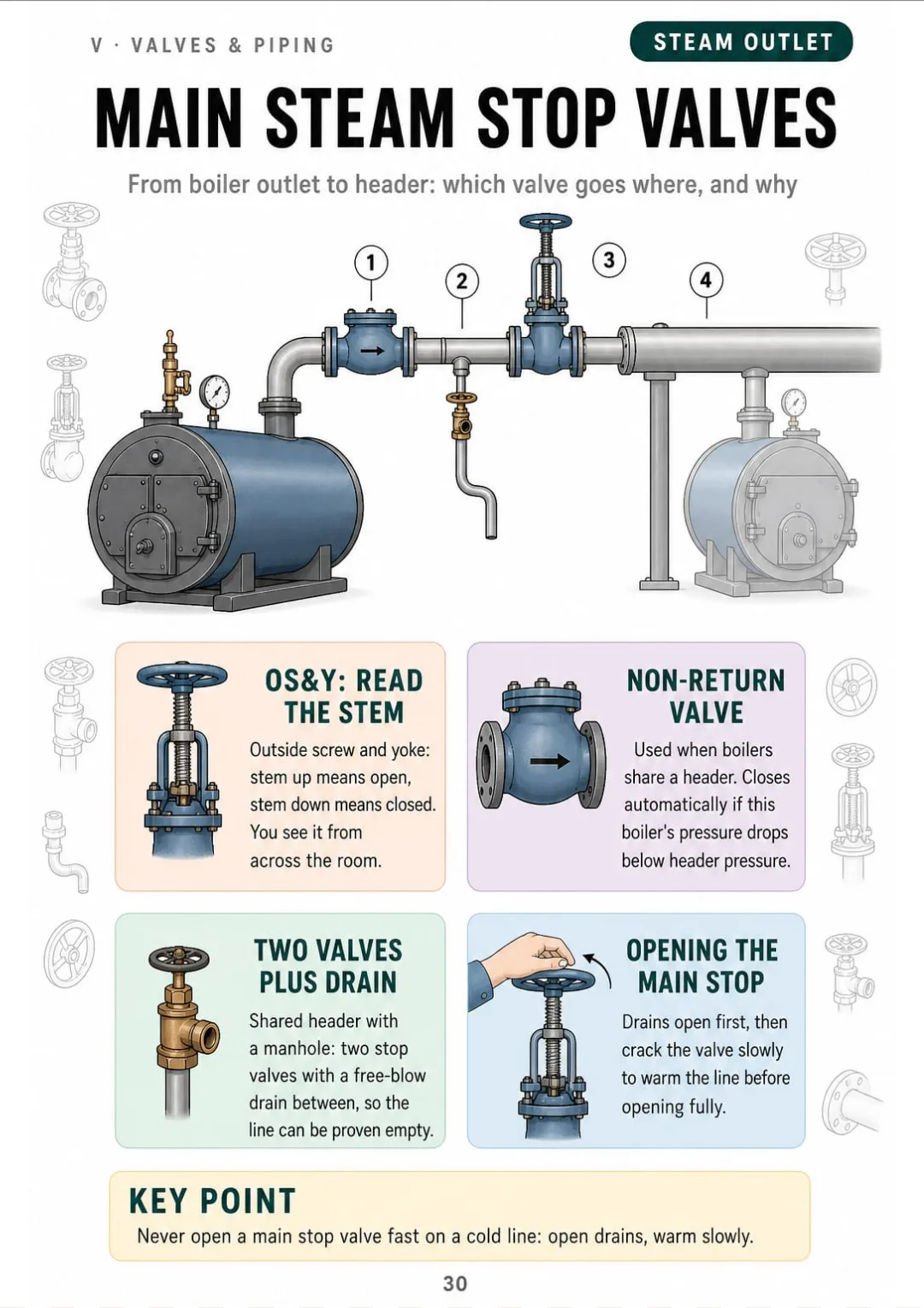
Boiler outlet to header: non-return valve, OS&Y stop valve and free-blow drain, drawn in order.
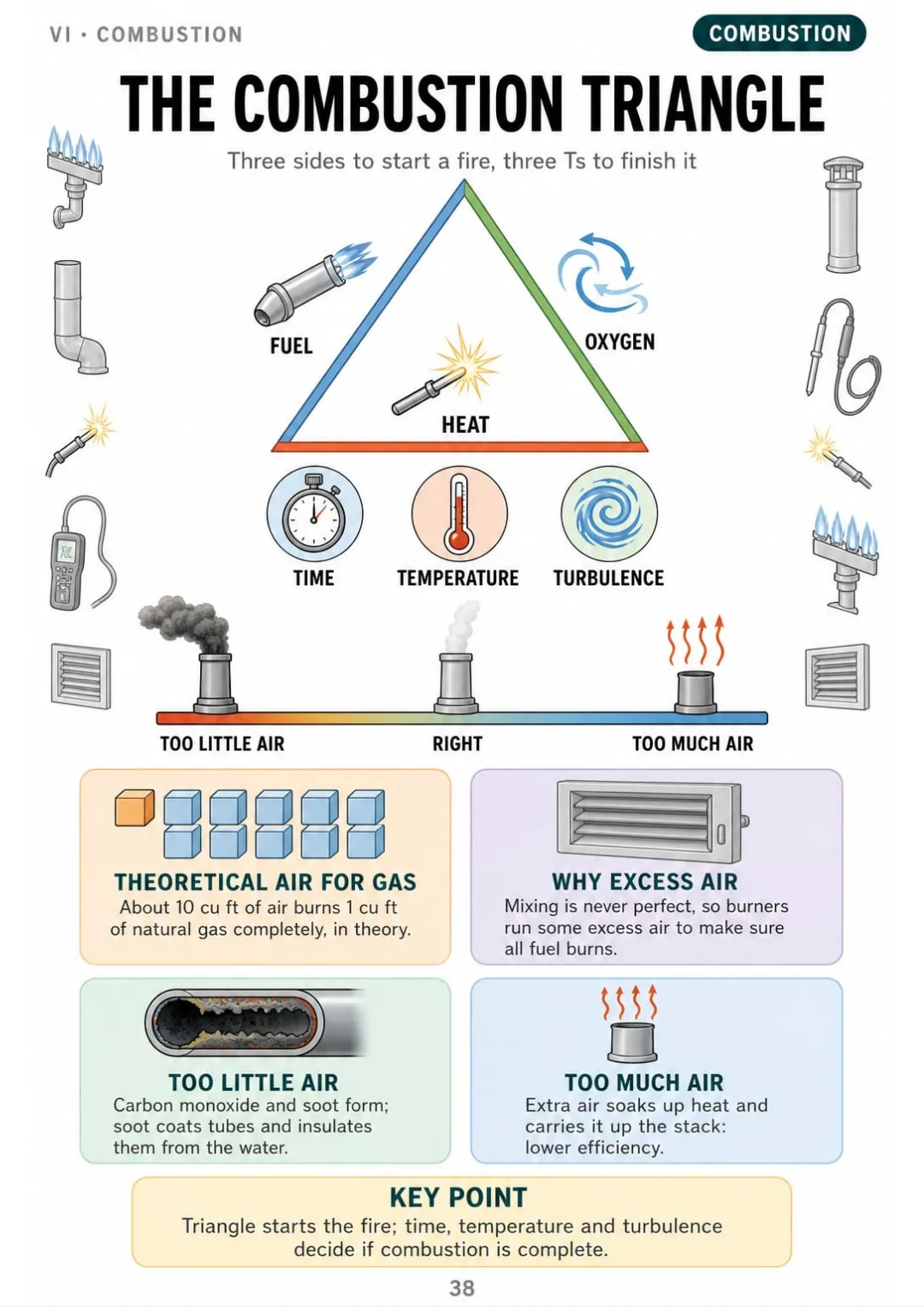
Fuel, oxygen, heat + the 3 Ts: about 10 cu ft of air per cu ft of gas
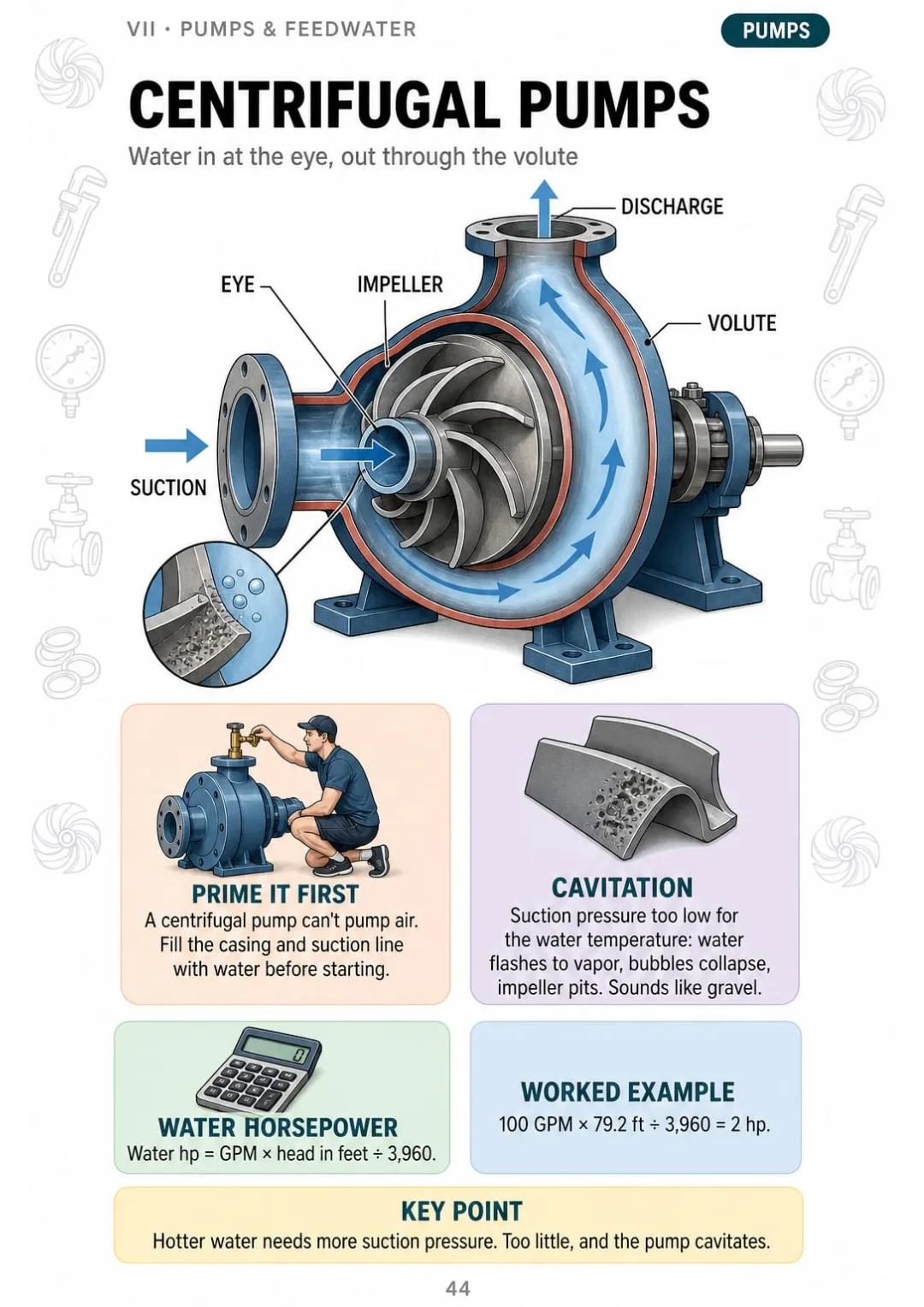
Water hp = GPM × head ÷ 3,960: 100 GPM at 79.2 ft is 2 hp.
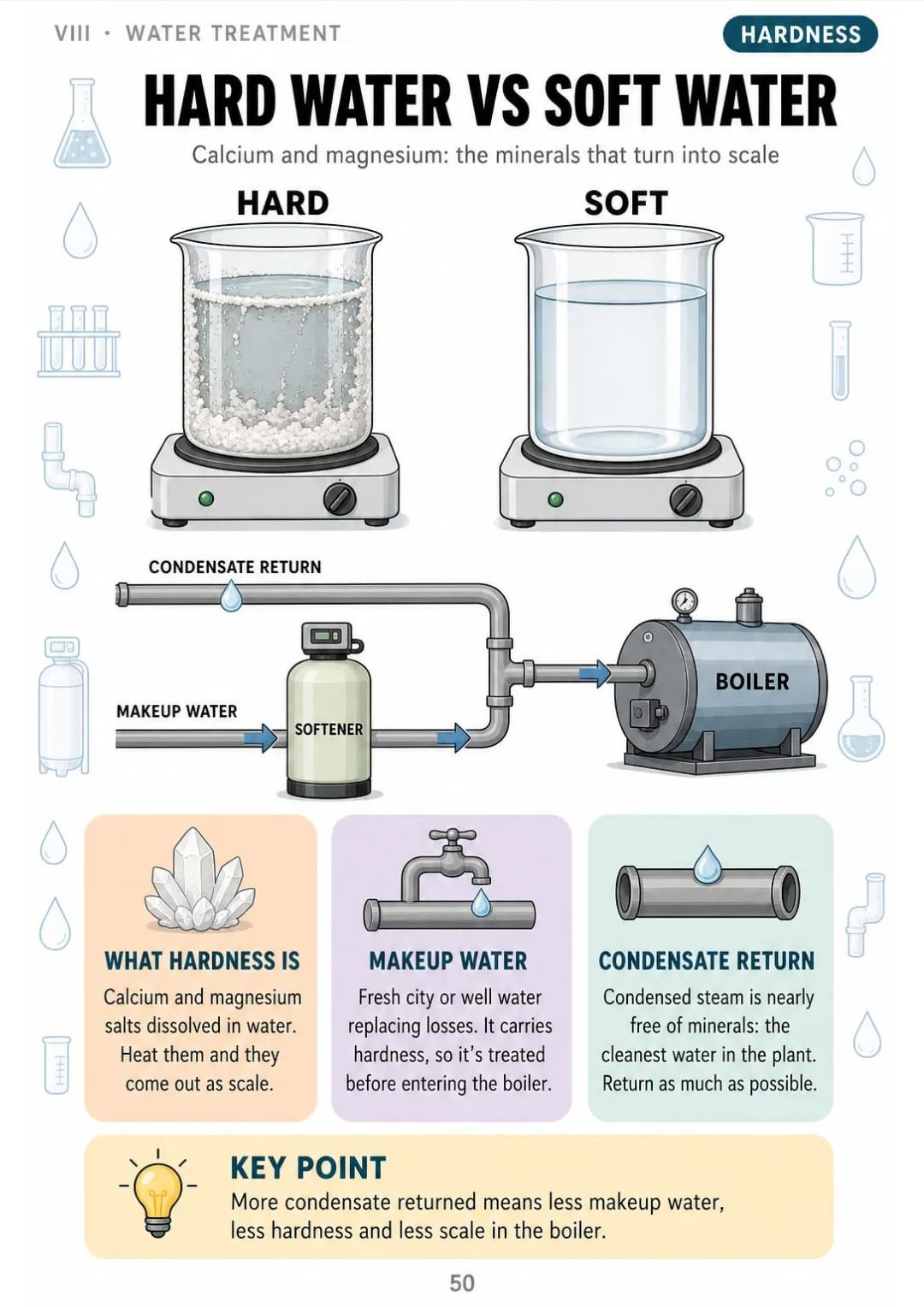
Hardness = calcium + magnesium; condensate is the cleanest water you have.

Swipe to see more →

These are real pages from the book. The table of contents is the full one: 12 parts and 75 topics.

It's That Nobody Put It in Order for You.

You've read the section on psig and psia three times. You close the book...

...and you can't remember which one starts at zero, or when to add the 14.7. It was just lines of text in a row.

10 psig + 14.7 = 24.7 psia, and 50 ft of water = 21.65 psi

Here psig vs psia is one page: two zeros drawn side by side, the gauge's and the true one, and 10 psig + 14.7 = 24.7 psia worked line by line.

And on the pages next to it, every piece of plant math gets its own: BTU, sensible and latent heat, boiler horsepower and pump horsepower.

First you understand why it works that way. Then the steps come back on their own.

SEE THE DIFFERENCE

Stop Memorizing Boiler Parts You Can't Picture:

THIS
  • Pages and pages of tight text
  • Boilers and fittings without a single drawing
  • On the exam, you don't know where to start
In the firetube boiler, the products of combustion pass through tubes surrounded by the water contained within the shell, heat being transferred through the tube walls. Firetube boilers are classified by the arrangement of furnace and tubes: the horizontal return tubular (HRT) type, the firebox type and the Scotch marine type, the latter employing an internal cylindrical furnace with two, three or four gas passes, a pass being each travel of the gases along the length of the boiler before discharge to the stack.
FOR THIS
  • Every boiler and fitting drawn
  • One topic per page, with the rules in boxes
  • You remember it because you've seen it
Scotch marine, firebox and HRT: numbered gas passes from furnace to stack
CONTENTS

Take a Look at the 12 Parts and 75 Topics

The license exam, boiler fundamentals, steam and plant math, safety devices, valves and piping, combustion, pumps and feedwater, water treatment, boiler operation, plant equipment, safety and codes, and the final review: 80 pages, all drawn

IThe License Exam · pp. 6-8
  1. Who Licenses You: City, State or NIULPE
  2. Low Pressure vs High Pressure: Where the Line Is
  3. How to Study for a Multiple-Choice License Exam
IIBoiler Fundamentals · pp. 9-14
  1. Firetube Boilers
  2. Watertube Boilers
  3. Cast Iron Sectional Boilers
  4. Electric Boilers
  5. Boiler Terms That Sound Alike
  6. Boiler Components on One Drawing
IIISteam, Heat and Plant Math · pp. 15-21
  1. Pressure: psig vs psia
  2. Temperature, Heat and BTU
  3. Sensible Heat vs Latent Heat
  4. Saturated vs Superheated Steam
  5. Heat Transfer in a Boiler
  6. Boiler Horsepower and Efficiency
  7. Simple Machines, Work and Power
IVBoiler Safety Devices · pp. 22-29
  1. Safety Valves: Set Pressure, Capacity and Testing
  2. Low-Water Fuel Cutoff
  3. Water Column, Gauge Glass and Try Cocks
  4. Pressure Gauges and Siphons
  5. Pressure Controls: Operating vs High Limit
  6. Flame Safeguard and Purge
  7. Preventing Furnace Explosions
  8. Hydrostatic Testing
VValves, Piping and Steam Distribution · pp. 30-37
  1. Main Steam Stop Valves
  2. Gate, Globe and Check Valves
  3. Feedwater Line: Stop and Check Valve Order
  4. Steam Traps
  5. Strainers and Condensate Return
  6. Water Hammer
  7. Priming and Carryover
  8. Piping Supports and Expansion
VICombustion and Fuel Systems · pp. 38-43
  1. The Combustion Triangle and Air-Fuel Ratio
  2. Natural Gas Burners and the Gas Train
  3. Fuel Oil Systems
  4. Reading a Flame
  5. Draft: Natural, Forced and Induced
  6. Draft Gauges and Manometers
VIIPumps and Feedwater Systems · pp. 44-49
  1. Centrifugal Pumps
  2. Positive Displacement Pumps
  3. Feedwater Pumps and Regulators
  4. Condensate and Vacuum Pumps
  5. Feedwater Heaters and Economizers
  6. Lubrication and Bearings
VIIIWater Treatment · pp. 50-56
  1. Hard Water vs Soft Water
  2. Scale and Corrosion
  3. Water Softeners
  4. Deaerators and Oxygen Removal
  5. Chemical Treatment: Sodium Sulfite and Phosphate
  6. Blowdown: Surface vs Bottom
  7. Boiler Water Tests
IXBoiler Operation · pp. 57-64
  1. Shift Change: Taking Over the Plant
  2. Starting Up a Cold Boiler
  3. Placing a Boiler Online
  4. Normal Operation and Rounds
  5. Maintaining the Water Level
  6. Taking a Boiler Offline and Shutdown
  7. Layup: Wet vs Dry
  8. Emergency Procedures: Low Water
XPlant Equipment Beyond the Boiler · pp. 65-72
  1. Air Compressors
  2. Steam Turbines
  3. Cooling Towers and Condensers
  4. The Refrigeration Cycle
  5. Absorption Chillers
  6. Steam and Hot Water Heating
  7. HVAC Basics for Plant Operators
  8. Electricity: Ohm's Law, Motors and Transformers
XISafety, Codes and Maintenance · pp. 73-78
  1. Lockout/Tagout
  2. Confined Space Entry
  3. Fire Safety in the Boiler Room
  4. The ASME Code Sections Operators Meet
  5. Preparing a Boiler for Inspection
  6. Boiler Cleaning: Fireside and Waterside
XIIFinal Review and Exam Day · pp. 79-80
  1. Frequent Mix-Ups, Side by Side
  2. Exam Day Checklist

What If Every Topic Fit on a Single Page?

Picture this:

Instead of rereading half a page on the feedwater line without being able to see it...

...you open the page and find the line drawn like a plant diagram: from the pump to the boiler, check valve first, then stop valve, with the flow arrows going the right way.

Boiler outlet to header: non-return valve, OS&Y stop valve and free-blow drain, drawn in order.

And safety valves, steam traps, combustion, blowdown and boiler horsepower turn into drawings and tables you can read at a glance.

You stop memorizing and start understanding.

That's exactly what The Boiler Operator Exam Sketchbook does. It's not “just another manual.” It's 12 parts and 75 drawn topics, with the plant math worked line by line, and at the end the frequent mix-ups side by side and an exam day checklist. Because what your brain sees in order, it remembers.

Because what your brain sees organized, it remembers.

Here Is What You Get with The Boiler Operator Exam Sketchbook:

Ipp. 6-8

The License Exam

Who licenses you (your city, state, employer or NIULPE), where low pressure ends and high pressure starts, and how to study for a multiple-choice exam.

IIpp. 9-14

Boiler Fundamentals

Firetube, watertube, cast iron sectional and electric boilers, the terms that sound alike, and every component on one drawing.

IIIpp. 15-21

Steam, Heat and Plant Math

psig vs psia, temperature and BTU, sensible and latent heat, saturated and superheated steam, heat transfer, boiler horsepower, efficiency and simple machines.

IVpp. 22-29

Boiler Safety Devices

Safety valves, the low-water fuel cutoff, water column and gauge glass, gauges and siphons, operating vs high-limit controls, flame safeguard, furnace explosions and hydrostatic testing.

Vpp. 30-37

Valves, Piping and Steam Distribution

Main steam stop valves, gate, globe and check valves, the feedwater valve order, steam traps, condensate return, water hammer, carryover and expansion.

VIpp. 38-43

Combustion and Fuel Systems

The combustion triangle and air-fuel ratio, the gas train, fuel oil systems, reading a flame, natural, forced and induced draft, and manometers.

VIIpp. 44-49

Pumps and Feedwater Systems

Centrifugal and positive displacement pumps, feedwater pumps and regulators, condensate and vacuum pumps, feedwater heaters, economizers and lubrication.

VIIIpp. 50-56

Water Treatment

Hard and soft water, scale and corrosion, softeners, deaerators, sodium sulfite and phosphate, surface and bottom blowdown, and boiler water tests.

IXpp. 57-64

Boiler Operation

Shift change, cold startup, placing a boiler online, rounds, water level, shutdown, wet and dry layup, and what to do on low water.

Xpp. 65-72

Plant Equipment Beyond the Boiler

Air compressors, steam turbines, cooling towers, the refrigeration cycle, absorption chillers, steam and hot water heating, HVAC basics and plant electricity.

XIpp. 73-78

Safety, Codes and Maintenance

Lockout/tagout, confined space entry, fire safety, the ASME Code sections operators meet, inspection prep, and fireside and waterside cleaning.

XIIpp. 79-80

Final Review and Exam Day

The frequent mix-ups side by side and an exam day checklist.

At the end of the book: Plant math worked line by line, the frequent mix-ups side by side and an exam day checklist.
And That Is Not All: 2 More Books, Free

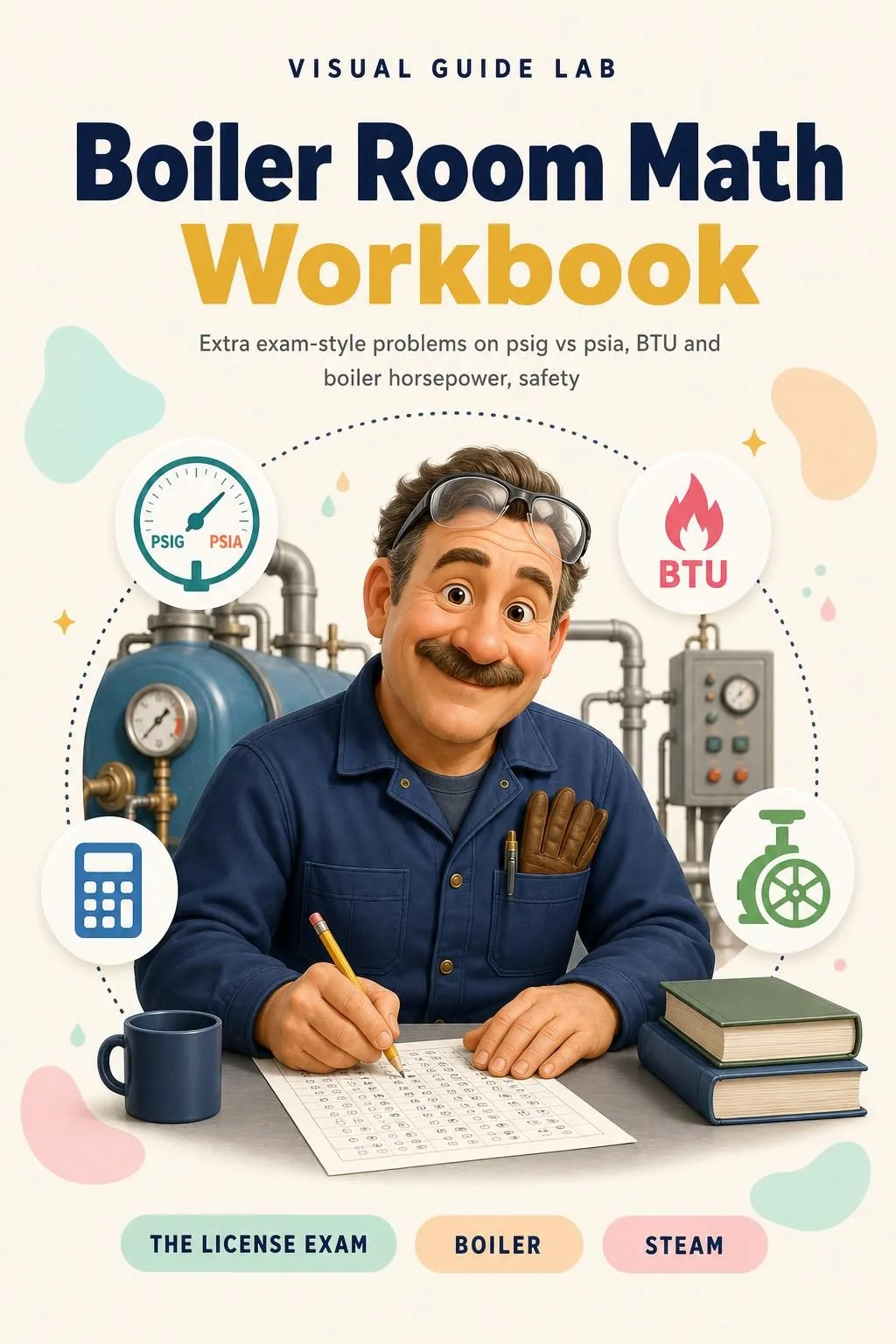
Boiler Room Math Workbook

BONUS 1: «Boiler Room Math Workbook»

Value on its own: US$ 17.90

Extra exam-style problems on psig vs psia, BTU and boiler horsepower, safety valve and pump problems, and heat and efficiency, each one worked step by step so you can practice the math until the steps are automatic.

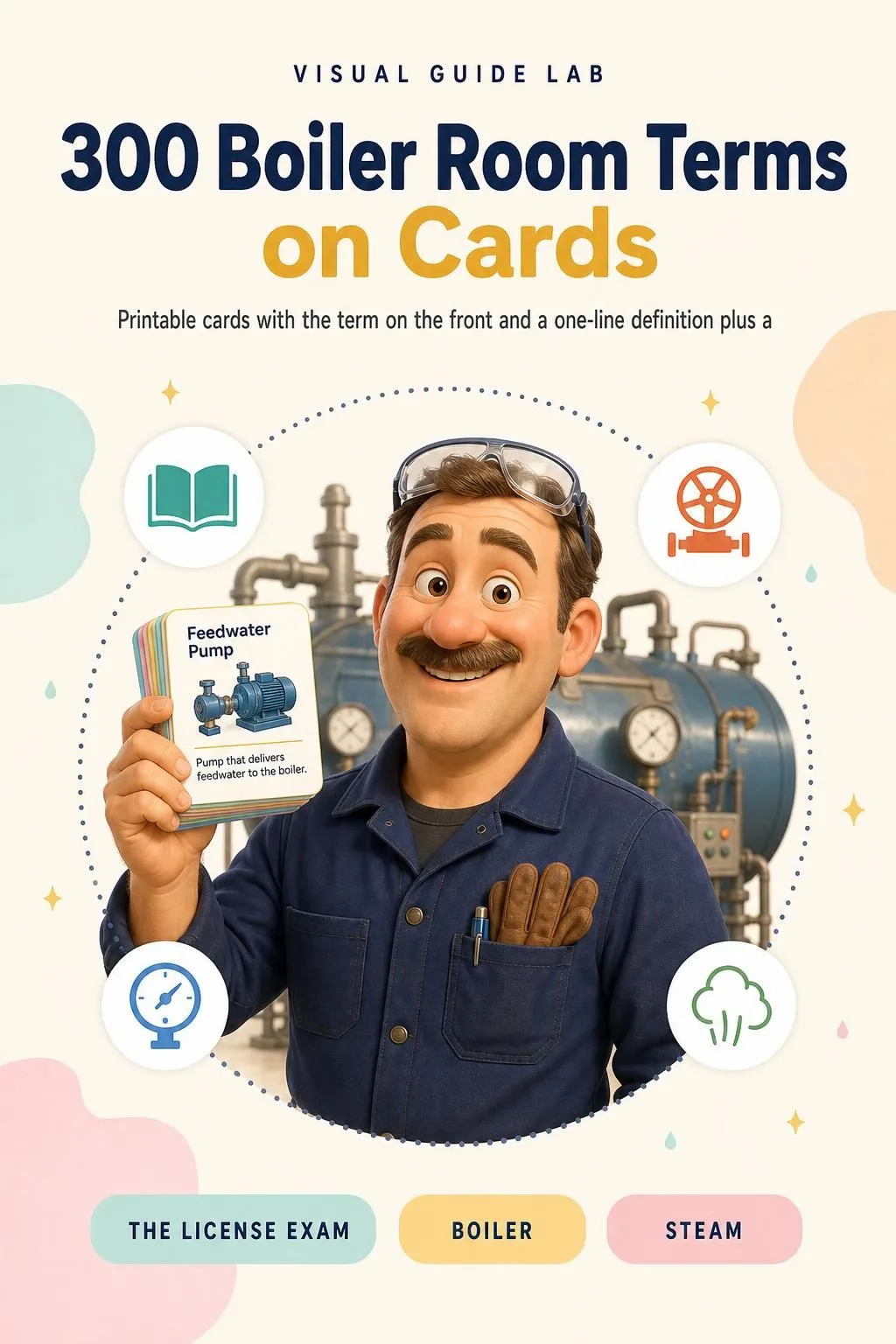
300 Boiler Room Terms on Cards

BONUS 2: «300 Boiler Room Terms on Cards»

Value on its own: US$ 14.90

Printable cards with the term on the front and a one-line definition plus a tiny sketch on the back, so you can review the vocabulary on a break or between rounds.

The Boiler Operator Exam Sketchbook + 2 Free Books

  • The Boiler Operator Exam Sketchbook: 80 illustrated pagesUS$ 63
  • BONUS 1: Boiler Room Math WorkbookUS$ 17.90
  • BONUS 2: 300 Boiler Room Terms on CardsUS$ 14.90
  • High-resolution PDF to printIncluded
Total value US$ 95.80
YOUR PRICE:
US$ 27
You save US$ 68.80
YES, I WANT THE BOILER OPERATOR EXAM SKETCHBOOK FOR US$ 27

📄 This is a digital PDF book sent to your email: nothing is printed or shipped.

Secure purchaseEncrypted payment30-day guarantee

PDF by email: The Boiler Operator Exam Sketchbook reaches your inbox as a PDF, and the two free books come by email too. One-time payment, no installments or hidden costs.

Is This Book for You?

You're going for your first license

You're going for your first license

Boilers, valves, controls and plant math, one topic per page, to study after your shift without fighting a thick course book.

Your exam date is close

Your exam date is close

A review of the whole syllabus in the same order, with the math worked line by line and the frequent mix-ups side by side at the end.

You already work in the boiler room

You already work in the boiler room

A quick visual refresher on what you see every day: safety valves, the feedwater line, blowdown, combustion and pumps.

To Sum Up: Here Is What You Get

US$ 95.80US$ 27
YES, I WANT THE BOILER OPERATOR EXAM SKETCHBOOK FOR US$ 27

📄 This is a digital PDF book sent to your email: nothing is printed or shipped.

30DAYS
GUARANTEE

30-Day Guarantee

30-day guarantee: tell us what didn't work and we'll refund 100%.

You have 30 days to try The Boiler Operator Exam Sketchbook and the two bonus books. If it doesn't work for you, email us, tell us what didn't work and we'll refund 100% of what you paid. One-time payment, no subscription.

Frequently Asked Questions

How do I get the material?

You get The Boiler Operator Exam Sketchbook as a high-resolution PDF by email, at the address you enter at checkout, to read on your phone or print. The two bonus books, Boiler Room Math Workbook and 300 Boiler Room Terms on Cards, also come by email.

Is it a monthly payment or a one-time payment?

A one-time payment of $27. No installments and no subscription.

Who is it for?

For people preparing for a low-pressure boiler operator or entry-level stationary engineer license exam: maintenance and facilities staff, boiler room operators, HVAC and plant techs adding the license, and anyone retaking the exam. It starts from the basics (psig vs psia, what each part of the boiler does) and goes straight to the point, so it works for a first license and for a review. Check the table of contents above to see the topics.

What sources is it based on?

It's organized around the public NIULPE syllabi (the Low Pressure Boiler Examination syllabus and the Power Engineer 4th Class reference syllabus) and checked against ASME Boiler and Pressure Vessel Code general principles, OSHA 29 CFR 1910.147 and 1910.146, and standard steam properties. Everything is written in our own words.

Is it official material? Does it cover my city or state exam?

No, it's independent study material. It covers the common content of low pressure boiler and entry-level stationary engineer exams. Your local law, license classes, experience hours and code edition aren't included: check your city or state licensing board. We are not affiliated with or endorsed by NIULPE, ASME, the National Board or any city, state or union.

Does it replace my course or on-the-job training?

No. It's a visual study aid to use alongside your licensing course, your plant's procedures, the manufacturer's instructions and your chief engineer. It doesn't give you a certificate and it doesn't count as training hours toward your license.

Are the practice questions the ones on the exam?

No. The practice questions in the book and the problems in the Boiler Room Math Workbook bonus are written for this book. They are not official questions from any exam. They're there to help you practice the way the exam asks.

Can I print it?

Yes. It's a PDF, so you can print the whole book or just the pages you want to keep handy in the boiler room.

What if I don't like it?

30-day guarantee: tell us what didn't work and we'll refund 100%.

One Last Thing Before You Decide...

You don't have to reread the same page hoping it sticks this time.

You don't have to memorize valves and formulas you can't picture.

And you definitely don't have to walk into the exam without knowing where to start.

One last thing before you decide: you don't need more hours with the course book. You need the same topics in order, one page each, with the drawing. 80 drawn pages + 2 bonus books, PDF by email.

One-time payment: US$ 27 · Guarantee: 30 days · PDF by email

YES, I WANT THE BOILER OPERATOR EXAM SKETCHBOOK FOR US$ 27

📄 This is a digital PDF book sent to your email: nothing is printed or shipped.